


Phone Cleaner Junk Scan
4.5154.00 Reviews
App Specs
- Version
- 1.3.3
- Updated On
- License
- Free
- Downloads
- 100,000+
- Developer
- theblue llc
- Categories
- Tools
- Platform
- Android
Screenshots
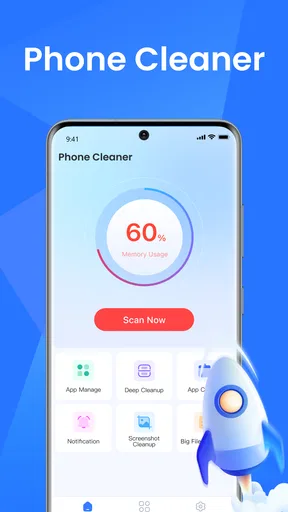
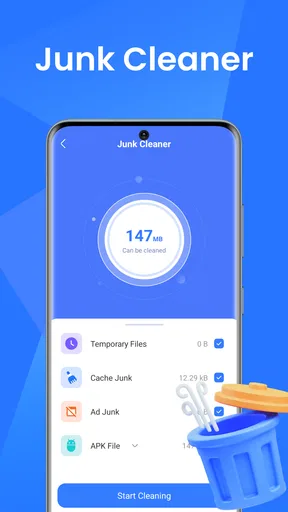
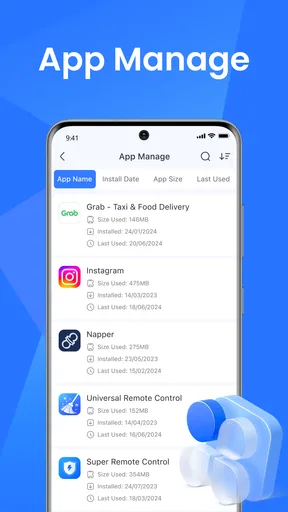
 Analysis by AppCompare
I installed Phone Cleaner Junk Scan to see whether a focused cleaning tool could make routine phone maintenance easier without turning the process into a confusing technical chore. The app comes from theblue llc and sits in the Tools category, with a simple purpose: help identify junk and cache so I can decide what deserves to be removed. That narrow focus matters, especially for people who find crowded storage screens, tiny labels, or complicated maintenance menus tiring to use.
My overall impression is that this is a straightforward utility rather than an all-purpose phone manager. It is free, rated for Everyone, and currently listed as version 1.3.3 for devices running iOS 11 or later. Its audience is broad, but its usefulness depends on what you expect from a cleaner. If you want a quick way to inspect clutter, it makes sense. If you want deep file management, battery diagnosis, privacy controls, or a fully automated maintenance system, I would look elsewhere.
How the interface feels during a normal cleaning session
I find that a normal cleaning session is easiest to approach as a review, not a one-tap fix. In this section, I’d focus on how a narrow junk-and-cache task can keep the process understandable, while still making it worth pausing over each result before removal. That distinction leads to the more important question: where simplicity stops being enough.
Readability and navigation
The strongest part of the experience is its limited scope. I did not have to work through a large collection of unrelated tools before reaching the cleaning function. That makes the app easier to understand than many utility suites that combine storage analysis with contacts, photos, security checks, and performance claims. A person who only wants to look for junk can approach it with a clear question: what can I safely review and remove?
The store summary describes it as a smart cleaner for junk and cache, while the short description reduces that idea to “Phone Cleaner.” Those labels set a useful expectation. This is not presented as a replacement for the phone’s complete storage settings, and I would not treat it as one. The app is best understood as a guided inspection layer that may make an otherwise tedious task feel more approachable.
In my experience, simple navigation is particularly valuable when a user is already frustrated by a nearly full device. Storage warnings create pressure, and pressure makes dense menus harder to follow. A cleaner that keeps the main task visible can reduce that mental load. I would still read each result before confirming removal, because a clean-looking interface does not make every suggested item disposable.
The app has attracted a 4.5 average from around 3.7 thousand ratings, with roughly 152 written reviews and more than 100 thousand installs. Those figures suggest that the basic idea is understandable to a meaningful group of users, but they do not tell me whether every phone model or storage situation will behave identically. I would use the app as a convenience, not as a guarantee that every item it finds is unnecessary.
Worth Reading Before You Choose

EA SPORTS FC Mobile 26 Is a Bigger Football Game, but It Takes Time

Flipboard Shows What News Apps Must Do Beyond the Feed

Switching to Android Auto Means Rethinking Your Driving Routine

Google Calendar Makes a Crowded Week Easier to Manage

Ludo King Makes the Most of the Minutes Between Plans

Baby Panda World Brings Quick Play to Modern Phones, but Its Game Library Feels Busy
Why a focused layout can help different users
People with limited technical confidence may benefit from the app’s direct purpose. Instead of asking them to understand every storage category, it gives them a starting point for reviewing junk and cache. That does not remove the need for judgment, but it can make the first step less intimidating. I would recommend beginning with a small cleanup rather than trying to clear everything in one session.
There is also a practical benefit for users who have difficulty maintaining attention across many screens. A short, repeatable workflow is easier to remember: open the cleaner, inspect the scan, check what is selected, and confirm only what makes sense. If a person uses a screen reader, enlarged text, or display scaling, the important test is whether labels remain understandable and controls remain easy to locate on their particular device. I would not assume that a simple-looking app automatically solves every accessibility need.
For someone who prefers large visual targets and minimal movement, the appeal is similar. A focused tool can be less tiring than navigating through a phone’s broader settings. However, the final removal action deserves deliberate attention. A fast tap is convenient, but accidental deletion is not a good trade for speed, especially when the user is working with unfamiliar categories.
Motor and sensory considerations
Cleaning a phone is often done one-handed, while commuting, or when the device is already behaving slowly. That creates a situational accessibility issue rather than a permanent one. I found the app most useful when I could give it a calm minute of attention, rather than trying to operate it while walking or switching between several tasks.
Users with tremors, reduced dexterity, or difficulty making precise taps should take a slower approach. Review screens in storage tools can contain several selectable items, and the difference between inspecting a result and confirming removal can matter. I would use the phone’s own touch accommodations, display zoom, or other built-in controls where available, then perform the cleanup from a stable position. The app may simplify the task, but it cannot replace system-level assistance for precise interaction.
For users with visual fatigue, the main advantage is the reduced amount of information to process compared with a full device-management suite. The main caution is that storage decisions should never be made from color or icons alone. If a result is unclear, I would pause and look for its label or leave it untouched. A cleaner is helpful when it explains what I am reviewing; it becomes less helpful when speed encourages guesswork.
People with hearing loss are unlikely to be disadvantaged by a visual maintenance task, since the core purpose does not depend on spoken instructions. Someone with cognitive or memory-related difficulties may appreciate a repeatable routine, but I would still suggest using the app with a trusted person the first time. The safest workflow is not the one with the fewest taps; it is the one that makes the consequences of the final tap clear.
Situational access in everyday use
A realistic example is a phone that has started warning about low storage before a family trip. The owner wants room for new photos but does not want to sort through every application or personal file. I would open Phone Cleaner Junk Scan, use it to inspect the junk and cache results, and then remove only items that are clearly temporary. Afterward, I would check the phone’s own storage view to see whether the change was meaningful. This two-step approach prevents the cleaner from becoming the sole authority over valuable data.
Another useful situation is after repeated app use has made a device feel cluttered. A person who does not enjoy technical maintenance can schedule a manual check when they are at home, with enough time to read the results. The app’s free price makes that occasional use easy to try without committing to a subscription, which is important for people who only need a cleaner once in a while rather than every day.
It may also suit shared households where one person helps another maintain a phone. The helper can explain what junk and cache mean, then guide the owner through the review instead of taking over the entire device. That preserves more control for the person who owns the phone. I consider this a better use of a cleaner than silently running aggressive removal on someone else’s device.
Travel, poor lighting, and limited connectivity can change the experience of any utility app. I would not begin an important cleanup in a rushed setting, and I would keep a backup of irreplaceable content through the phone’s normal tools before experimenting. The app is most accessible when used as a deliberate check, not as an emergency button pressed without reading.
How it compares with built-in tools and broader cleaners
The usual alternative is the phone’s own storage management area. Built-in tools are often the safest first stop because they are integrated with the operating system and can show how space is being used across applications, media, and files. If I need a complete picture of storage or want to manage a specific large app, I would start there. Phone Cleaner Junk Scan is more appealing when I want a simpler cleaning-oriented view instead of a broad settings tour.
Another alternative is a larger utility suite that combines junk scanning with photo compression, duplicate detection, battery monitoring, security checks, or file browsing. Those products can be more capable, but their extra features also create more decisions and more opportunities for confusing prompts. For a user who values a narrow workflow, this app’s restraint may be a strength. For someone who wants one dashboard for every maintenance task, it may feel incomplete.
I would also be cautious about comparing any cleaner purely by the amount of space it claims to recover. Cache is temporary by nature, and removing it does not guarantee a lasting performance improvement. Some applications may rebuild cached content soon afterward. The meaningful question is whether the app helps me identify clutter I understand, not whether it produces a dramatic number on the screen.
Practical workflow and useful habits
My preferred method is to scan first, review second, and remove third. I would not treat the scan result as an instruction to select everything automatically. Instead, I would look for familiar categories, consider whether I need the associated app to retain temporary content, and leave anything ambiguous alone. This is a small habit, but it turns a potentially risky shortcut into a controlled maintenance routine.
A second useful habit is to compare the phone’s available space before and after cleaning. That tells me whether the session produced a worthwhile result. If the change is small, the problem may be large videos, offline downloads, or unused applications rather than junk and cache. In that case, the built-in storage screen is a better next step than repeating the same scan.
I would also avoid using the cleaner as a substitute for backups. Temporary files are one thing; personal photos, documents, messages, and recordings are another. Before a first cleanup, especially on a device used for work or family records, I would make sure important material exists somewhere else. The safest cleaning workflow is selective, reversible where possible, and based on understanding rather than panic.
For users with accessibility needs, I would add one more step: adjust the phone before opening the app. Increase text size if that helps, enable touch accommodations if precise taps are difficult, and choose a quiet moment if concentration is limited. These changes are not special features of the cleaner, but they can determine whether the app feels manageable or stressful.
Where the experience still has limits
A focused workflow can make routine cleanup less daunting, but it does not turn every storage issue into junk or cache. Here I’d look at the situations where I would switch to the phone’s built-in storage controls or another tool, and why a careful user may sometimes get more value from doing less rather than repeating a scan.
Remaining barriers and expectations
The biggest limitation is that a focused cleaner cannot solve every storage problem. If the phone is full because of large media libraries, downloaded content, or applications that occupy substantial space, a junk scan is only part of the answer. I would not install this expecting a complete diagnosis of every byte on the device. Its usefulness is narrower and more practical: inspect the kind of clutter it is designed to address, then use other tools when the cause lies elsewhere.
There is also a trust barrier. Any app that asks me to remove files must earn confidence through clear explanations and careful confirmation. Even when the interface is easy to navigate, I remain responsible for checking what is selected. Users who want completely automatic maintenance may find that caution frustrating, while users who prefer control will probably see it as necessary.
The app may not be the right choice for someone who needs advanced file operations, detailed storage history, or a single place to manage photos, downloads, and applications. In those cases, the operating system’s own tools or a more comprehensive file manager should come first. I would also skip it if the only goal is to improve speed instantly; freeing temporary space and improving performance are related only in certain situations, not guaranteed outcomes.
Accessibility is similarly personal. A clean layout can reduce cognitive effort, but it does not prove that every control works perfectly with every assistive technology, display setting, or motor preference. I would test the first scan carefully on the intended device. If labels are difficult to distinguish, buttons are too close together, or the review process is tiring, the phone’s built-in settings may offer a more comfortable route.
The product is relatively new, having been released on July 2, 2025, and it is maintained by theblue llc. Its current version is 1.3.3. Those details make it sensible to keep expectations practical: I would judge it by the cleaning workflow available now, keep the app updated through the normal store process, and avoid assuming that a future feature or behavior is already present.
Who I would recommend it to
I would recommend Phone Cleaner Junk Scan to someone who wants a free, focused way to review junk and cache without learning a large maintenance suite. It is especially suitable for occasional cleanup, for people who feel overwhelmed by broad settings menus, and for helpers who want to guide a less technical family member through a simple storage check.
I would be more cautious with users who have valuable files but are uncomfortable interpreting cleanup results. They can still try it, but I would suggest doing the first session with a backup and another person available. The app is not a replacement for careful file management, and its convenience should not encourage anyone to delete unfamiliar material.
For power users, the decision is straightforward. If you already understand the built-in storage tools and want detailed control, this may add little. If you prefer a compact starting point for temporary clutter, it can save time. Compared with broader cleaners, it trades range for focus; compared with system settings, it trades integration for a potentially simpler cleaning path.
My inclusive verdict
After using it, I see Phone Cleaner Junk Scan as a modest but approachable tool rather than a magic performance booster. Its free access, Everyone content rating, and clear cleaning purpose lower the barrier to trying it. The app can be useful for people who want a less intimidating route into storage maintenance, including users who benefit from a short, repeatable workflow.
Its accessibility value comes mainly from focus and reduced complexity, not from any promise that every individual need will be covered. Users with visual, motor, hearing, or cognitive considerations should combine the app with their device’s own accessibility settings and take time to review each result. That approach makes the tool more dependable and keeps control with the person making the cleanup decision.
My recommendation is positive but measured: try it if junk and cache are the specific problem, use it selectively, and verify the result through the phone’s storage controls. Choose a built-in manager or a broader utility when you need full file visibility or advanced organization. For an occasional, easy-to-understand cleanup check, Phone Cleaner Junk Scan earns a place among the simpler tools worth considering.
Pros
- Quickly identifies cache files
- residual data
- and other digital clutter.
- Simple interface makes basic cleaning accessible to less experienced users.
- Can help free storage space when your phone is running low.
- Useful scan summaries show which file categories take up space.
- May help organize large or unwanted files before manual deletion.
Cons
- Some cleaning features may require a paid subscription or in-app purchase.
- Automatic deletion can remove files you intended to keep if unchecked.
- Scan results may include files that are safe to leave untouched.
- Cleaner apps cannot significantly improve performance on every device.
- Frequent ads or upgrade prompts may interrupt the cleaning process.
FAQs for Phone Cleaner Junk Scan
What is Phone Cleaner Junk Scan, and what does it do?
Phone Cleaner Junk Scan is a utility app designed to help identify unnecessary files that may be taking up storage space on an Android or iOS device. It can typically look for items such as cached data, temporary files, old downloads, duplicate content, and unused remnants. Before deleting anything, review the scan results carefully because some files may still be useful to you.
Is Phone Cleaner Junk Scan safe to use on my phone?
The app can be useful when handled carefully, but no cleaning tool should be given unlimited permission without checking its settings and scan results first. Review the requested access, privacy information, and the categories selected for removal. Avoid deleting personal photos, documents, conversations, or app data unless you are certain they are no longer needed, and create a backup before performing a major cleanup.
Can Phone Cleaner Junk Scan improve my phone’s performance?
Removing unnecessary temporary files may free storage and can make a device feel less cluttered, especially when the phone is nearly full. However, the app cannot fix every performance problem. Slowdowns may also be caused by an aging battery, outdated software, demanding background apps, overheating, or insufficient memory. Treat the cleaner as a storage-management tool rather than a guaranteed speed booster.
Does Phone Cleaner Junk Scan delete photos, videos, or important files?
The answer depends on the scan categories and the actions you approve. Some cleaning apps can identify large files, duplicate media, screenshots, or similar photos, but these items should not be removed automatically without confirmation. Carefully inspect previews, file names, locations, and sizes before tapping delete. If the app offers a recycle bin or recovery option, learn how long deleted items remain available.
Is Phone Cleaner Junk Scan free, and are there subscriptions or advertisements?
Availability of features, advertisements, and subscription terms can vary by platform and app version. The free installation may include basic scanning while advanced cleaning tools, deeper analysis, or an ad-free experience may require payment. Before starting a trial or confirming a purchase, check the store listing for pricing, renewal details, and cancellation instructions so you are not surprised by recurring charges.


